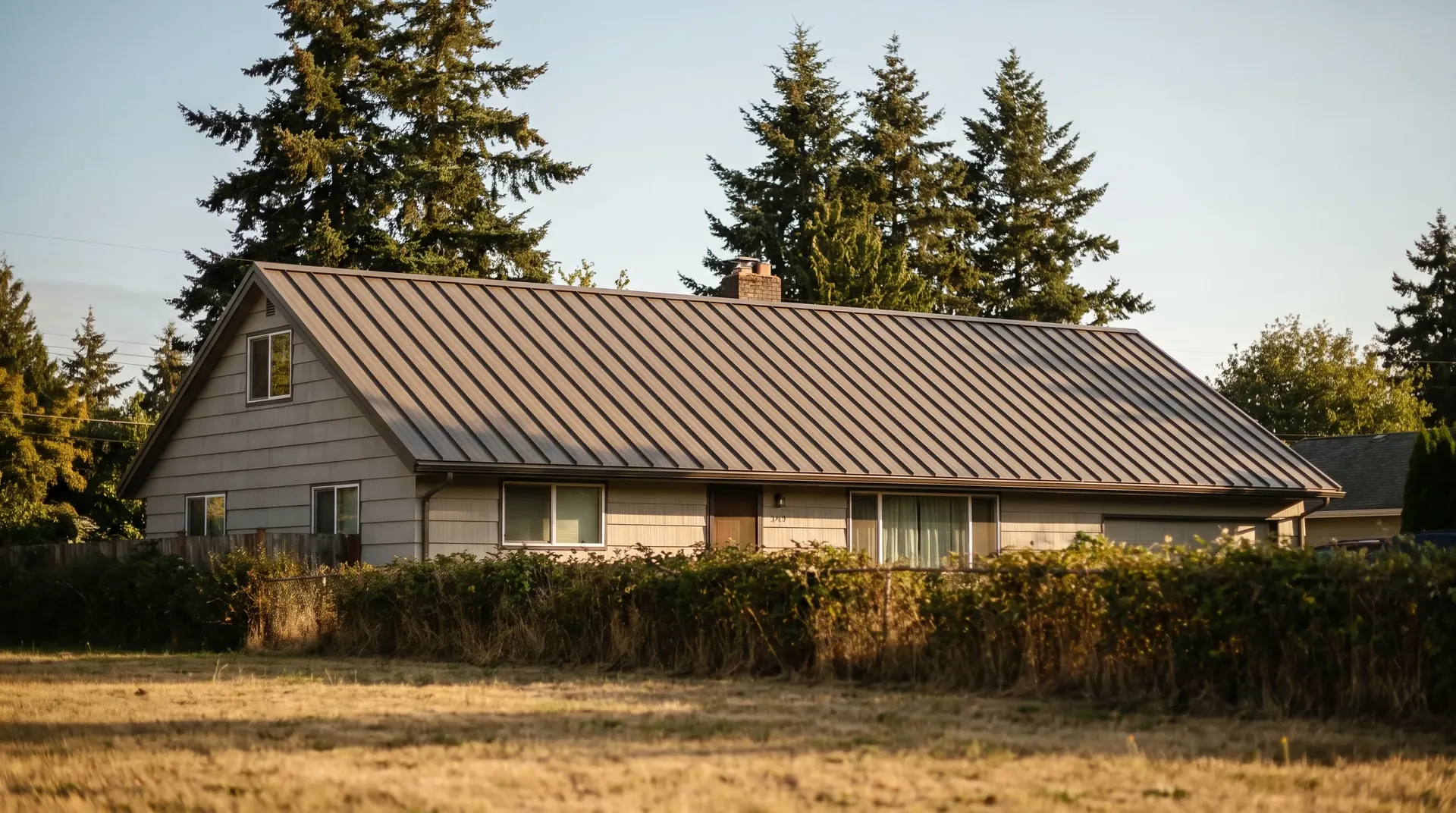
A metal roof will not automatically lower your homeowners insurance, and anyone telling you it will is guessing about your policy. What is generally true is that insurers view metal favourably, mostly for fire resistance and wind performance, and that some carriers reflect that in what they charge. Whether yours does, and by how much, is a question only your carrier can answer about your address.
That is the short version. The longer version is more useful, because roof age and roof condition affect your insurance in ways that have very little to do with what the roof is made of, and those are the parts most people find out about at the worst possible time.
Why insurers like metal in the first place
Two properties do most of the work. Fire resistance, which matters more in some parts of Washington than in Whatcom County but is priced across the state. And wind performance, where a correctly fastened metal roof holds up well and, importantly, does not shed material that damages everything downwind of it.
Impact resistance is a third factor that gets mentioned frequently in national roofing content and matters much less here. Hail is the reason it appears on those lists. We are not in a hail belt, so treat any hail based argument you read about metal roofing as written for a different part of the country.
Roof age is the thing that actually moves the needle
This is the part worth understanding, because it applies whatever your roof is made of.
Insurers care a great deal about how old a roof is. As roofs age, some carriers become more restrictive: tighter terms, higher deductibles specific to the roof, or a shift from replacement cost coverage to actual cash value, which pays out depreciated value rather than the cost of a new roof. Some will decline to write a policy at all past a certain age.
The thresholds vary by carrier and they change, so we are not going to print an age. What we will say is that this catches people out regularly, usually at renewal or during a sale, and that a new roof of any material resets that clock. That reset is sometimes worth more than any discount attached to the material.
Condition and documentation matter too
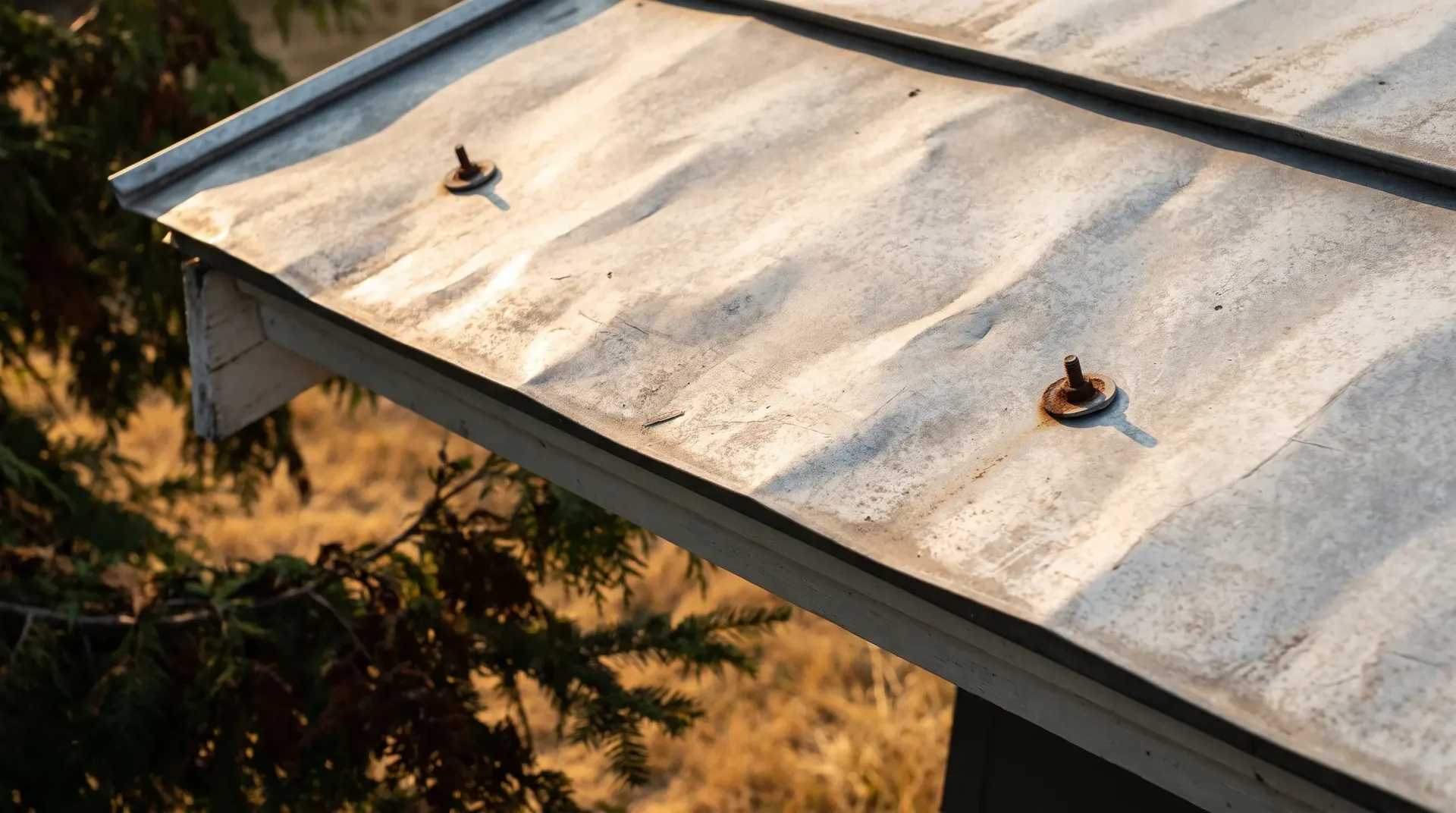
A documented roof is a stronger position than an undocumented one. A written condition report with photographs, or an install date with the scope attached, gives you something concrete when a carrier or a buyer starts asking. It also helps distinguish sudden damage from gradual wear later, which is the distinction that determines whether a claim goes anywhere.
That is not a reason to buy an inspection from us specifically. It is a reason to keep the paperwork from whoever does your roof.
What to actually ask your carrier
Before you commit to the work, not afterwards. Ask them directly:
- Does the roof covering material affect the premium on this policy, and if so by how much.
- What is your position on roof age, and does it change my coverage or my deductible as the roof gets older.
- Is my roof currently covered at replacement cost or actual cash value, and does that change with age.
- If I replace the roof, what documentation do you want, and does it change anything on the policy.
Get the answers before the roof is on. A discount that exists is worth knowing about, and a coverage restriction you did not know about is worth even more.
What we do not do
We do not file insurance claims, we do not negotiate with adjusters, and we do not advise on coverage. There is a segment of the roofing industry built around storm claims and it produces a lot of aggressive door knocking after weather events. Be careful with anyone who offers to handle your claim, promises to cover your deductible, or turns up unsolicited after a wind storm with a clipboard.
What we will do is tell you honestly whether damage looks storm related or wear related, and give you photographs. That is genuinely useful to a claim. The rest is between you and your carrier.
When to get the roof looked at
If your carrier has flagged the roof age, if you are buying or selling and the roof has become a negotiation point, or if you have had wind damage and want to know what you are actually looking at before you call anyone, a metal roof inspection with photographs and a written report is the useful next step.
That is a roof question rather than an insurance question, and it is the part we can help with.