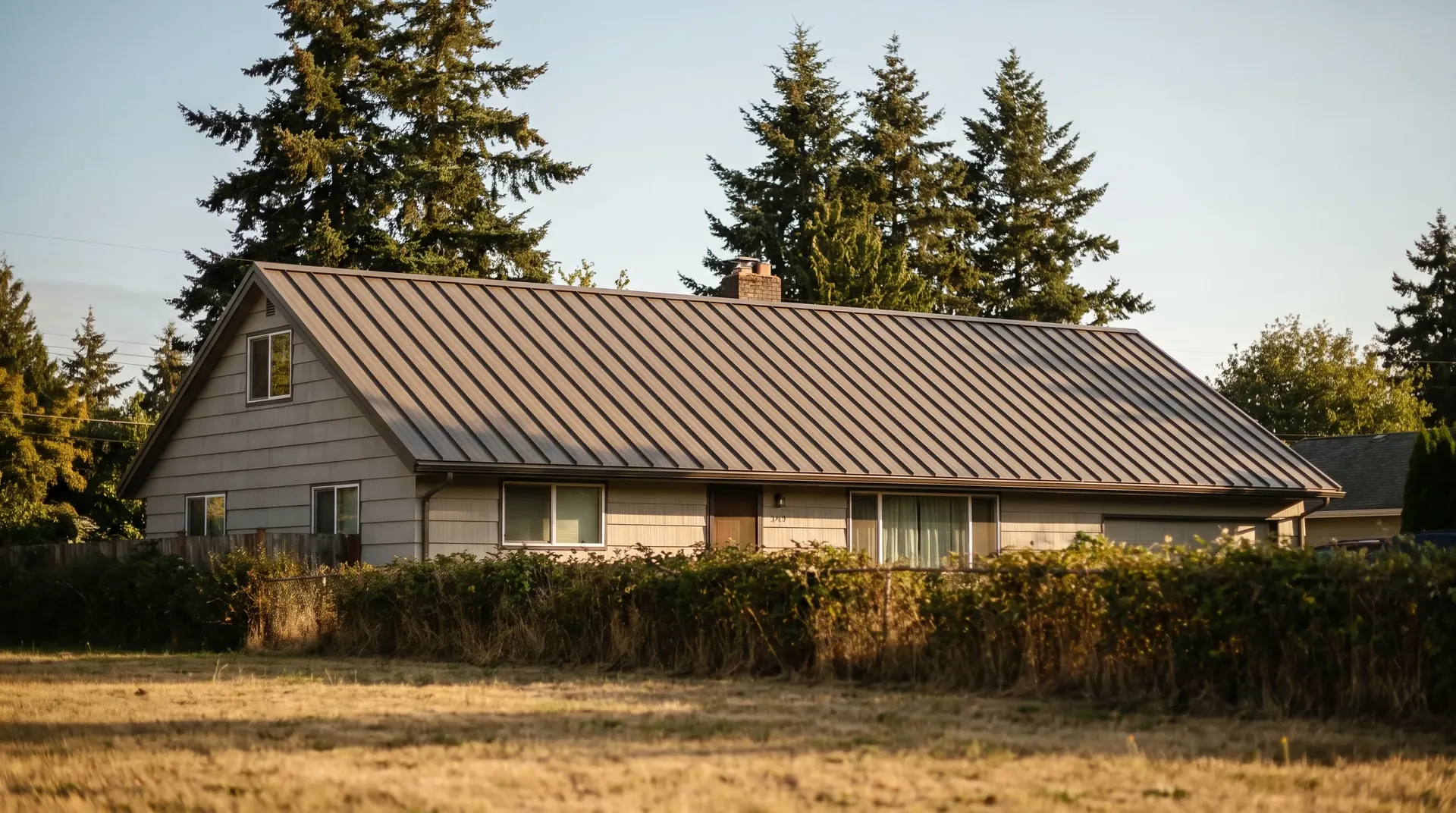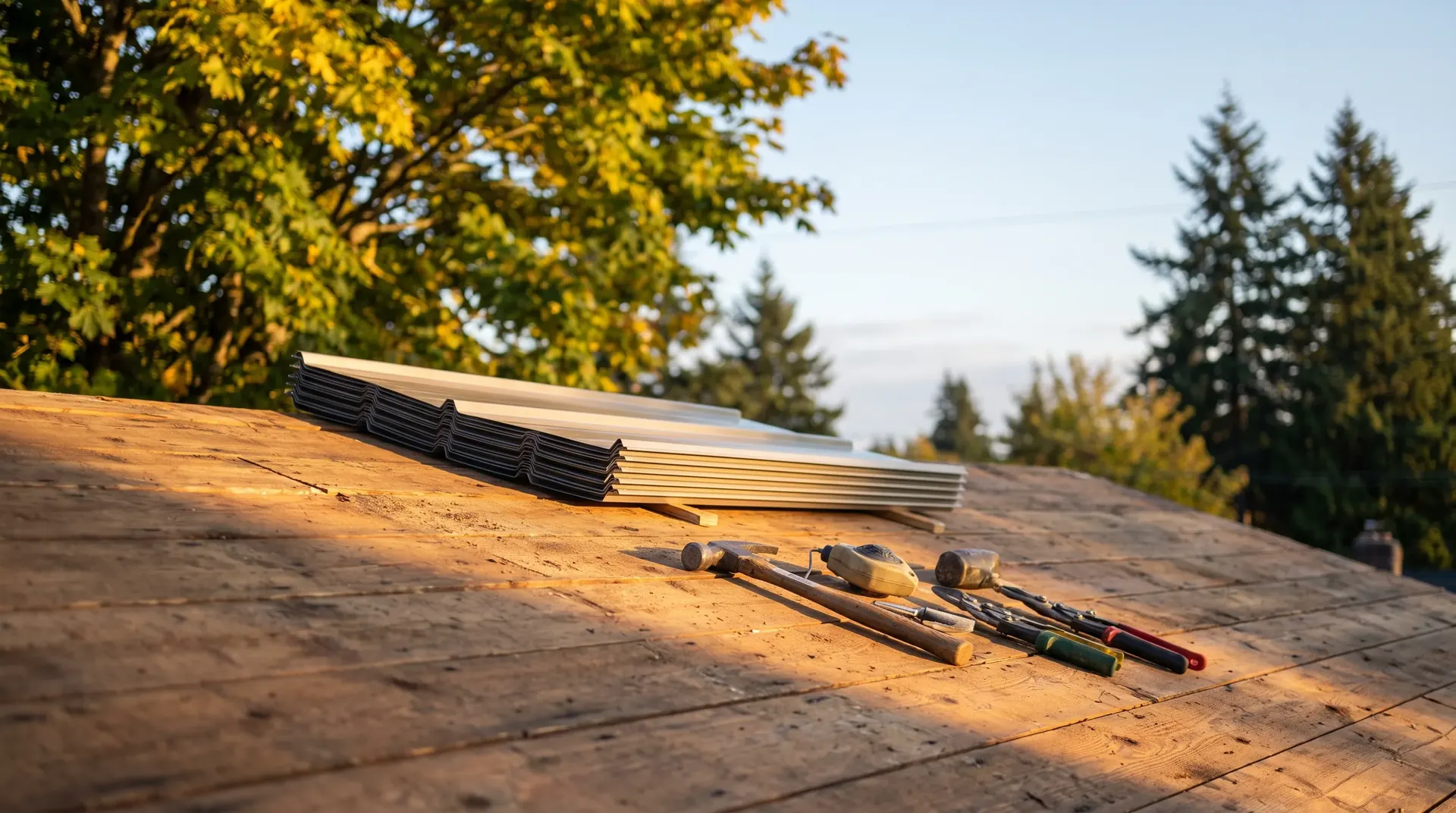
The biggest problem with metal roofs is bad installation, and everything else on this list is a distant second. The panels almost never fail. What fails is the detailing around them, and you cannot see any of it from the ground.
That is the honest headline answer. What follows is the rest of the list, written by a company that only installs metal roofs and would still rather you bought the right roof than our roof.
It costs more, and the payback is slow
This is the real reason most people do not have one. A metal roof is a significantly bigger cheque than another round of composition, and the money comes back over decades rather than years. If you are moving inside about five years, the arithmetic does not work in your favour and no amount of lifecycle costing changes that.
It is louder than people expect
Not the drumming on a bare tin shed that everyone pictures, and not silent either. On a properly built assembly with a ventilated attic and insulation below it, the difference from composition is modest. On a low pitch roof with a shallow or unvented attic, which is a lot of the mid century stock around Bellingham and a lot of the cabin stock at Birch Bay, heavy rain is audible and some people mind. In a region that gets as much rain as this one, that is worth thinking about honestly before rather than after.
It dents, and you cannot patch it invisibly
A fir limb coming down on a metal roof leaves a mark. Under the conifer canopy that covers most of this city, that is not a hypothetical. Composition takes the same hit and you replace a few tabs. On metal, replacing a panel in the middle of a run is more involved, and matching it may not be possible at all if the profile or the colour has been discontinued. A repaired metal roof can stay visibly repaired.
Oil canning is real and it is not a defect
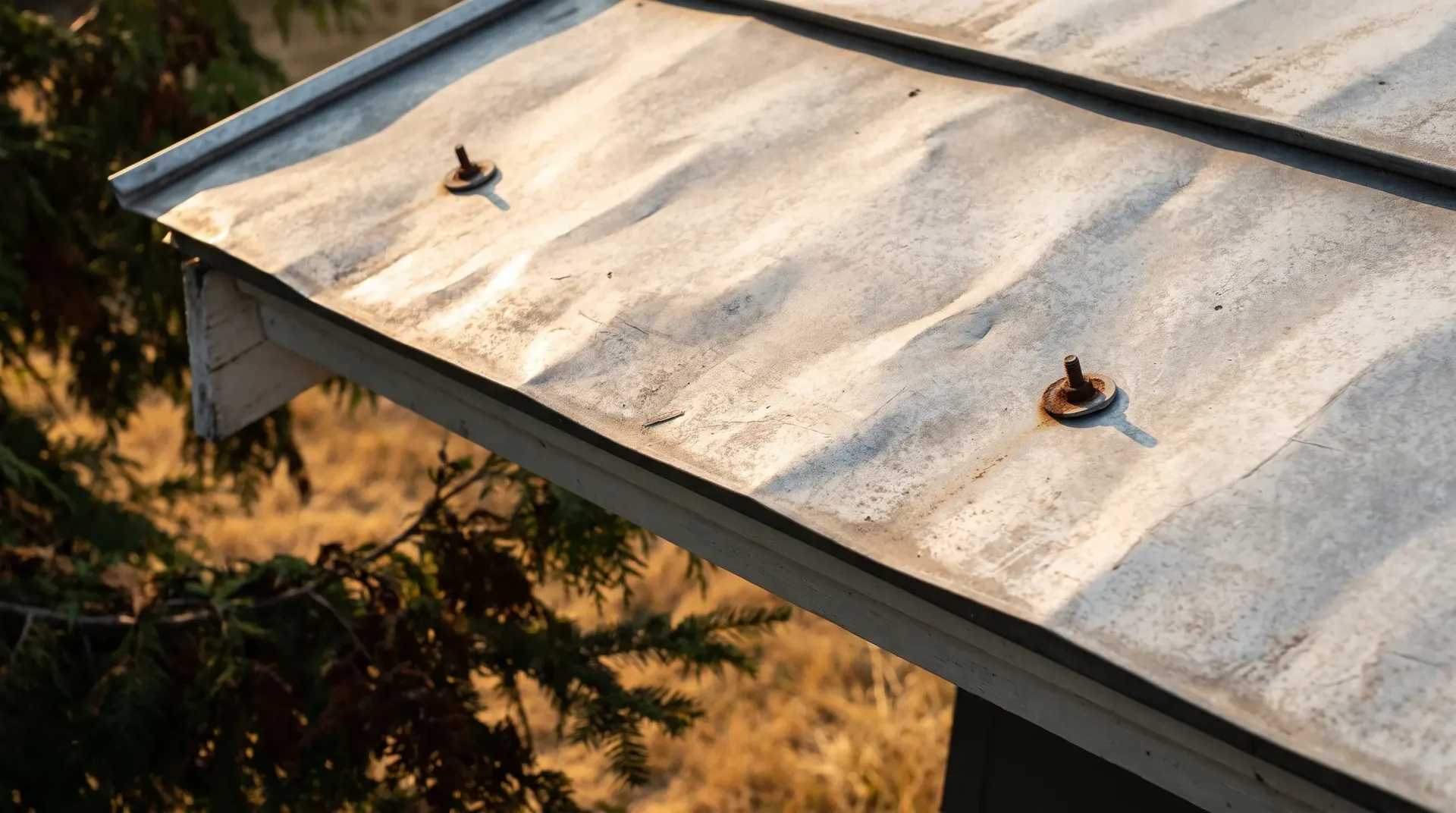
Oil canning is the slight waviness you see across wide flat panel areas in raking light. It is an inherent property of flat metal, it does not affect performance, and no manufacturer or installer can promise you a roof without it. It shows up most on standing seam, because the pans are wide and smooth, and it shows up most in exactly the low golden light that makes a roof look best otherwise. Plenty of people never notice. A few notice permanently. There is no way to know which one you are in advance, which is genuinely awkward.
Condensation is a design problem, not a roof problem
Metal is a good conductor, so if warm moist air reaches the underside of a cold panel it will condense there. On a well ventilated attic assembly this is a non issue. On an unheated shop, an uninsulated outbuilding, or a summer cabin that has quietly become a year round house, it can produce water dripping off the underside of the roof that looks exactly like a leak and is not. Fixing it means fixing the assembly, not the roof, and that is a bigger conversation than most people expect to be having.
The installer matters more than the product
This is the one to take away. Metal roofing forgives nothing at the details. Flashings at chimneys and sidewalls, penetrations added later, fastener torque, and leaving the panel room to move as it heats and cools. A premium panel system installed badly will perform worse than a modest system installed well, and the difference is invisible on the day the scaffolding comes down. It becomes visible in year seven. It is most of what we are actually selling on our metal roof installation page, and it is the reason the price spread between quotes is as wide as it is.
Who should not buy one
- You are selling within about five years. You will not get the money back. Put composition on it.
- The budget is tight enough that the choice is a cheap metal roof. A well installed composition roof beats a poorly detailed metal one on every measure that matters. This is the most common bad decision we see.
- The roofline is very cut up. Many dormers, valleys, skylights and penetrations means the flashing work dominates the cost, and the value of the system erodes fast.
- Noise genuinely bothers you and the assembly cannot address it. Low pitch, shallow attic, no realistic path to more insulation. Believe yourself on this one.
- The roof has real life left. Replacing a serviceable roof early is a loss no material recovers.
When metal is the right answer
The list above is not an argument against metal roofs. It is an argument against metal roofs on the wrong house.
If you are staying, if the roofline is reasonably straightforward, if the budget covers a properly detailed job rather than the cheapest available version, and if you are tired of doing this every twenty years, then it is a good decision and the case for it does not need overselling. That is the conversation most of our metal roof replacement work starts from.
If you want somebody to come and tell you honestly which of those two paragraphs applies to your house, that is what the first visit is for. We will tell you when the answer is no.